Maintaining the correct tire pressure is one of the most important steps in keeping your trailer safe, stable, and road-ready. While many trailer owners remember to check their vehicle tires, trailer tires are often overlooked — even though they carry heavy loads and experience constant road stress.
Proper trailer tire pressure combined with routine inspections helps prevent blowouts, improves towing performance, and extends tire life. Whether you haul equipment, cargo, or recreational gear, staying proactive with tire care protects your trailer and everyone on the road.
Why Tire Pressure and Inspections Matter
Your trailer tires support the full load of your cargo and endure heat, friction, and changing weather conditions. Even slight pressure loss or unnoticed damage can lead to serious safety issues.
Routine checks help:
• Prevent tire blowouts and roadside breakdowns
• Improve handling and braking performance
• Reduce uneven wear
• Extend the life of your tires
• Protect axles, suspension, and bearings
Small maintenance steps make a big difference.
Maintain Proper Trailer Tire Air Pressure
Correct air pressure is critical for safe towing. Tires that are underinflated run hotter, wear faster, and are far more likely to fail while in motion.
How Temperature Affects Tire Pressure
Outside temperatures directly impact tire pressure. For every 10°F change in temperature, tire pressure can change by about 1 PSI.
This means:
• Cold weather can lower tire pressure
• Hot weather can increase pressure beyond safe levels
Checking pressure regularly — especially during seasonal changes — helps maintain safe operating conditions.
How to Find the Correct PSI for Your Trailer Tires
You can determine the proper tire pressure by checking:
• The tire sidewall (listed as maximum cold PSI)
• The trailer’s VIN placard or compliance label
• Your trailer owner’s manual
Always measure pressure when tires are cold for the most accurate reading.
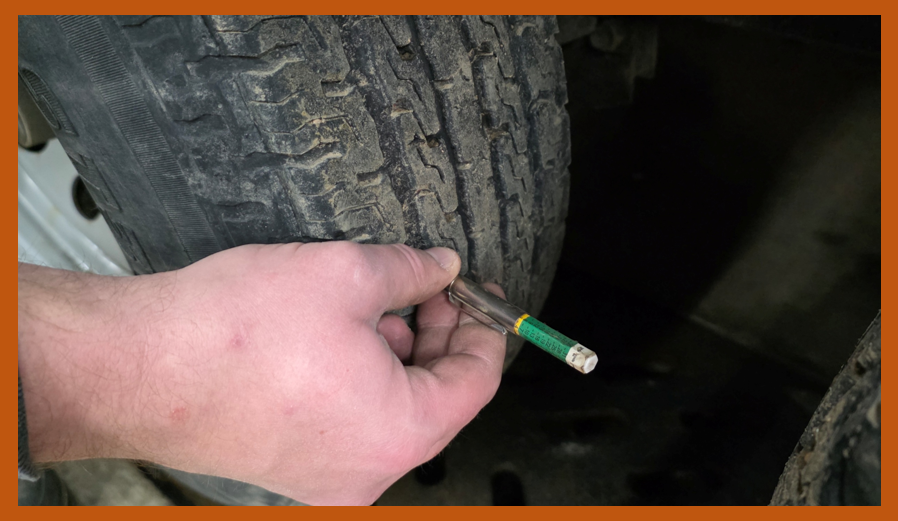
Inspect Tread Depth for Traction and Control
Good tread ensures your trailer maintains grip during turns, braking, and wet conditions.
Ways to check tread depth:
• Use a tread depth gauge
• Perform the penny test
• Watch for built-in wear indicators
Uneven wear may point to alignment or suspension issues.
Examine Sidewalls for Early Signs of Failure
Sidewall damage often causes sudden blowouts. Inspect for:
• Cracks or dry rot
• Bulges or bubbles
• Cuts or punctures
• Weather-related deterioration
Replace damaged tires immediately to avoid unsafe towing conditions.
Monitor Tire Age
Even properly maintained tires degrade over time.
Check the DOT date code on the sidewall — the final four digits indicate the manufacturing week and year.
Most trailer tires should be replaced every five to seven years, regardless of appearance.
Signs Your Trailer Tires Need Attention
Watch for:
• Excessive vibration
• Pulling while towing
• Uneven tread wear
• Increased road noise
These can indicate tire, bearing, axle, or suspension issues.
Keep Your Trailer Safe with Proper Tire Care
Proper trailer tire pressure combined with routine inspections is one of the easiest ways to prevent breakdowns and improve towing safety. Taking a few minutes to check your tires can save time, money, and stress down the road.
Bring your trailer to Load’em Up Trailers for expert service and complete peace of mind on every haul. Our experienced technicians will inspect your tires, verify proper air pressure, evaluate tread and sidewall condition, and ensure there are no suspension or alignment issues affecting your trailer’s performance. Schedule your trailer tire inspection today and tow with confidence every mile.